Saturday, July 05, 2008

Viral Loop using Slide.com

Enjoyed this article from Andrew Chen regarding creating the Viral Loop. Slide.com was offered as an example and in about 2 minutes i had it set up and embedded in this blog:

[ Note: On 1/8/09, I removed the slide.com referenced above as it was slowing down page load for my blog. You can see the slide.com show here: ]

Let's see what happens....

Monday, May 05, 2008

Where We Get the Music Matters

Bud's Jazz Records closed last Tuesday. With great sadness we said goodbye to an icon of Seattle's music scene. It was at Bud's where in 1988 I purchased my first Wes Montgomery (Live at the Vanguard with Wynton Kelly); and did a deep dive into Donald Byrd, Gerry Mulligan, Horace Silver, Stan Getz, Dextor Gordon and so many other jazz greats.

I recall fondly the music piped out of the subterranean windows, spilling out onto the sidewalk above calling me to descend Bud's steep stairwell to discover the music. Often, as happened on Bud's last day of operation, I would purchase whatever Bud was spinning-- his taste was always impeccable (last week it was Jay Thomas, Live at Tula's 2002). And the best part, is that each time I play those discs, it transports me back to the very moment of discovery at Bud's surrounded by mountains of vinyl and jewel cases each one holding the promise of a special musical journey that I longed to take.

While I am the first to embrace and indeed celebrate the speed, access and choice that digital music delivery offers, I find it hard to believe I'll have depth of emotional connection and memory to Itunes or Amazon the way I will always have to Bud's Jazz Records.

Would love to hear memories about "your Bud's Jazz"-- I hope everyone has at least one. Post a comment below.

Wednesday, March 26, 2008

Guerilla's in the Mist

Leaving the office last week, I spied a Jeep Wrangler equipped with a generator and projection system casting a SBUX promo against a brick wall in Pioneer Square in Seattle. The two guys in the Jeep told me they work for a company who does this kind of work up and down the West Coast with "affiliates" in NY and Boston.


Apart from the legality, definitely got my marketing mojo going.

Tuesday, December 04, 2007

Chillin' with Facebook: Making Meaning

Egged on by several colleagues at Digital Railroad, I recently created a Facebook account. Having dabbled previously with MySpace and Second Life to little effect, I had low expectation for the amount of engagement I would have with the latest social networking craze. Boy, was I wrong.

Not only am I engaged, but I am having F-U-N! And while I certainly do not see as many of my business contacts roaming on Facebook the way we do on LinkedIn, the ones that are there are also having fun and creating opportunities to connect about issues that are of both personal interest (tastes in music, books, games, photos etc) making the interactions we have in our professional lives that much richer.

As humans it has been said we are nothing more than meaning making machines. In our warp speed transactional world where the lines between work, play and family are increasingly blurred, Facebook may very well be the 21st century's answer to help us, if not create, perhaps sustain, deeper connections with those we find empathy and with whom we wish to discover meaning.

That's progress.

Sunday, November 18, 2007

In Memory of Anthony Ippolito


June 30, 1927 - November 18, 2007

Sunday, August 26, 2007

In Defense of Summer Vacation


Witnessing colleagues growing reluctance to take earned vacation time, I read with great interest a recent article in the WSJ titled, "Vacation Deflation: Breaks Get Shorter" highlighting a growing trend among US workers:

- 35% do not use their annual allotment of earned vacation days
- 14% of full time employees take 2 weeks vacation
- More employees are opting for long weekends and forgoing one week vacations all together
- Dual income households find it harder and harder to coordinate time-off

Whatever pressures today's worker are subject to (leaner workforce, always-on connectivity, internal/external competition, etc), having just returned from a one week vacation, I can tell you unequivocally me, my family and yes, my employer, have all benefited from my brief sabbatical.

Making it a point not to check email, voice mail, cell phone, internet, IM, etc, I was able to truly disconnect from the daily pressures of the job, and focus intently on my vacation goal: rest and relaxation. Having indulged in 9 straight days (yes, I'm counting bookend weekends) of uninterrupted fun, exercise, exploration and reflection I now feel refreshed and re-juvinated and look forward to returning to work and a job I truly love.

While I know my absence required others to pick up some chores and shoulder some decisions that I would normally make, I left the workplace one week ago knowing I had done the same for others earlier this summer. Having earned this "currency" among my peers, I felt no qualms about asking them to now reciprocate.

Not only am I an advocate for the rejuvinating benefits of earned vacation, but I also believe it is important for organizations to expect employees to take a break an d prepare for it. Show me an employee who is "unable" to schedule a week away from the office and I'll show you someone who probably has been ineffective in executing their respective goals/plans for the year and has not invested in an internal peer network and support mechanism that promotes their ability to get some well earned time off.

For managers, if I am unable to leave the workplace for a week, and have confidence that the team I have built/led is able to support the business without me, then I probably haven't done a very good job managing my team the other 349 days of the year.

So, work hard, build some currency with peers and consciously create your support network throughout the year and if you"re lucky, you'll have (at least) a week of fabulous weather and memories that will keep you as pumped as I am about the next 51 weeks.

Can't wait for my next vacation....

Monday, June 18, 2007

Disneyland: Welcome to Marketing 101


The moment you cross the threshold into the Magic Kingdom, you enter a world that is the apex in execution of what marketers refer to as "brand experience." Of course visitors to the park expect to see Walt's vision play out in every piece of gingerbread Victoriana on Main Street; in the elegant simplicity of Alice's tea cup ride; in the bawdy playfulness of his Caribbean Pirates and come to full blossom in the Small World utopia that we all yearn to experience. Yet what is truly remarkable is the combined effect these world famous attractions have when orchestrated in combination with a total brand experience.

While the attractions are plainly visible, what may not be as apparent, but no less essential to every guests' enjoyment of the Disney experience, is the artistry that goes on behind the scenes: the "cast members" (aka Disneyland employees) play their roles to a tee and no operational detail is left to chance. Eg:

- The ice cream shop floor sweeper, who jubilantly informs you, in spite of just having pulled a 24 hour shift, after 35 years of service he measures job satisfaction knowing that whatever task he completes he contributes to making a guest "feel happier than before they entered".

- The actors who patiently play musical chairs with a group of young guests and as each child is eliminated from the round, happily announce that they are "UN-WINNERS!!!" (No one could ever be called a "loser" in Disneyland.)

- The crews who are constantly emptying trash cans and cleaning the park throughout the day and evening to insure that not a scrap of paper is ever underfoot-- this in a park teeming with nearly 100K visitors daily.

- The ride operators, who after serving 1000's of customers each day, still greet your arrival with an earnest smile and genuine appreciation as if you were the first customer of the day--- and offer a high five to celebrate your successful completion of the ride.

- The waits in line: yes, the eventual long wait in lines are made far more bearable and dare I say, almost entertaining, since most of the featured attractions have waiting areas designed to be part of the ride experience and in fact help to add to the excitement and anticipation as you wait to officially start the ride.

- The Park Photographers strategically stationed in prime photo spots throughout the park, armed with the latest digital camera and strobe set-up, that just "happen to be waiting for you" when you want to capture that memorable group portrait that even the family's photographer (aka Mom or Dad) gets to appear in.

- The photo kiosks that display your action photo "magically" captured while riding the log flume on Splash Mountain and is available for print--with frame or without-- as you come walking out of the ride.

- The snack stands that not only sell cotton candy, soda and ice cream, but also give families the option to buy fresh cut pineapple spears, watermelon and bottled water.

Looking for a lesson in executing on total brand experience that your company can learn from? Just head to Disneyland.

Friday, March 23, 2007

RSS Photo Feeds From Digital Railroad

Photo buyers for a thirst for what's new/now can get images delivered to their desktop in real time as new images are posted from Digital Railroad's 1000+ photographer members. Here is a custom feed I created that delivers just released images of presidential candidates created by DRR member CandidatePhotos.com:

Create your own custom feed available now at Digital Railroad.

Sunday, March 18, 2007

What The World Needs Now

Do a Google search for the word "forgiveness" and you'll find 17MM entries. Search for "war"
and you'll see 581MM entries. A ratio of 34:1. "Hate" gets you 236MM hits or 15:1.

Let's begin to even the score.

Practice forgiveness.

Saturday, March 10, 2007

Digital SLRs - Obsolesence in the Making

Shopping for a new pro-level camera? You may want to think twice about dropping $5000 for the latest model. Reading updates from PMA it was fascinating to read comments from Michio Kariya, president, CEO and COO of Nikon Corp. where during his keynote address he explained how the life cycle of digital cameras have changed dramatically.

When Nikon released the F3 in 1980 (the then-standard bearer of pro photographers) the company had the benefit of 20 years of development to perfect the product. That camera stayed on the market for 20 years allowing Nikon to reap it's well earned return on investment.

Contrast that product cycle with today's digital SLR: In September 1999, Nikon introduced the Nikon D1, which had a life expectancy of 1.5 years. When introduced the camera had a retail price of $5000 breaking the then $20,000 barrier for a 10+ MPx capture camera. In 2002, the D100 was introduced with many of the same features of the D1 and cost just $2,000; two year later the D70 cost $1,000 and the D40 after that was $599.

Spend wise, grasshopper (or just check eBay first...)

Wednesday, February 28, 2007

Canon EOS 5D SLR - Fun & Fast!

This past weekend, I got my hands on a new Canon EOS 5D with a fast 24-70mm 2.8 zoom and had a blast taking photos of kids in a local youth soccer league here in Seattle.

If you are looking for a robust set of features in a pro-level camera, yet intuitive in its ease of use, I highly recommend checking out the 5D. After spending about 10 minutes reviewing Canon's quick start instruction booklet, I had a handle on all the many features of this powerful camera. Most importantly, as I was on the sidelines trying to capture fast moving action on the field, the camera's intuitive design and easy to use on board software never got in my way of getting the shots I wanted.

I've included some highlights of the images I captured in my Digital Railroad archive.

Enjoy!

Wednesday, December 27, 2006

Top Searches in 2006 - Reading the Tea Leaves

What are people searching for online? A quick survey of the top 10 searches in 2006 as reported by MediaPost of the three major search engines reveals the following:

Yahoo:

1. Britney Spears
2. WWE
3. Shakira
4. Jessica Simpson
5. Paris Hilton
6. American Idol
7. Beyonce Knowles
8. Chris Brown
9. Pamela Anderson
10. Lindsay Lohan

MSN

1. Ronaldinho
2. Shakira
3. Paris Hilton
4. Britney Spears
5. Harry Potter
6. Eminem
7. Pamela Anderson
8. Hilary Duff
9. Rebelde
10. Angelina Jolie

Google

1. Bebo
2. Myspace
3. World Cup
4. Metacafe
5. Radioblog
6. Wikipedia
7. Video
8. Rebelde
9. Mininova
10. Wiki

My quick takeaways:

1) Old School Celebrity rules: So much for the long tail, it appears that the head of the tail is dominated by mainstream celebrities who are promoted and financed by mainstream (aka old) media. No Lonely Girl here.

2) Web 2.0 is in the driver's seat: Check out Google's list- Myspace, Metacafe, RadioBlog, Wiki (2x). For marketers this is a clear call to action to sell where communities live.

3) Think Global: Bebo, Ronaldinho, Rebelde- after all, it is the world wide web. These stats remind me that US centric thinking can blind us to opportunities outside our borders.

Merry Christmas and may all your searches be bright!

Saturday, December 09, 2006

Shopping Brands v. Shopping for Deals

Doing any holiday shopping online this Christmas season? Are you conditioned to shop brands (either brick and mortar retailers or online) or are you shopping for deals? I for one am conditioned to shop brands, but clearly not everyone shopping the web this holiday season is. On Monday, Dec 4th the NY Times reported the "Top 10" Cyber Monday traffic results:

The winners: as measured by unique visitors (growth over 2005 in parens)

1) eBay - 9.5MM (-6%)
2) Amazon.com - 4.6MM (+24%)
3) Walmart.com - 3.4MM (+57%)
4) Dell - 2.5MM (+35%)
5) Target.com - 2.4MM (+8%)
6) Shopzilla - 1.9MM (+42%)
7) BestBuy.com - 1.8MM (+17%)
8) Overstock.com - 1.6MM (-20%)
9) Circuit City - 1.4MM (+18%)
10) MSN Shopping - 0.3MM (+164%)

Surprising to me was to see Shopzilla, a comparison shopping destination acquired last year by EW Scripps, increase uniques by 42% and placing it in the top 10 above Best Buy, Circuit City and MSN. While unique visitor traffic is not a direct reflection of revenue, seeing a comparison shopping destination rank so high among these high profile brands is yet another indication of how Web 2.0 companies are stimulating interest among consumers and influencing online shopping behavior.

Wednesday, December 06, 2006

The Future Is Calling - Are We Ready?

As we approach year end, it's always intriguing to look ahead and see what business opportunities we can expect to see develop in 2007. At a dinner hosted last night by the Washington Software Alliance (WSA), six panelists from the tech industry-- senior execs from companies such as Sun Microsystems, IBM, Forrester, eccentric, Futurist.com and a former Microsoft Exchange PM now leading a startup, HelpShare-- offered reflections on the year past and predictions for what may lie ahead.

L-R: John Cook, Seattle-PI; Fulup Foll, Sun Microsystems; Glen Hiemstra, Futurist.com; Gerrit Huizenga, IBM Linux; TA McCann, Helpshare; Robin Murdoch, Accenture; Ray Wang, Forrester (cropped).

One of the more enlightening exchanges took place, when moderator John Cook, Seattle PI technology reporter, asked each panelist: "If you had $5MM to invest in start-up companies, which market opportunities would you bet to win?", the panelists responded with some very intriguing ideas:

1) Anonymous identity provider - in an online world where privacy has increasingly become a antiquated notion, there is an unmet pain point that needs to be served
2) Multi-player gaming enabled through ad sponsored product placement - let the game experience revolve in and around product placements that resonate with the target demo and encourage users to interact with the product and the community
3) Healthcare record management - again, in the call for privacy, and in an effort to eliminate accidental deaths due to poor record keeping or availability, enable patients to have total control and real time access to their complete healthcare history
4) Housing solutions for the aging US population: provide scalable and affordable housing options for 65 y.o. plus market
5) DNA Mapping products designed to predict future disorders (as identified in DNA code) and pro-actively prescribe health care options to mitigate expected health problems
6) Social Networking that integrates brand advertising - there is a $70BB brand advertising market that is not being effectively addressed by the current crop of social networks
7) Database killer - eliminate databases worldwide and empower ubiquitous access to data through ASP solutions

Conversely, the panelists identified these marketing opportunities as "overhyped" in 2006 and expect consolidation or outright elimination of these businesses:

1) Wireless streaming of TV to mobile phones - given the user experience and alternatives (flat panel, HDTV)
2) Proprietary applications competing with existing standards - eg: SKYPE
3) Open doc format - the power of the MS .doc standard has proven to be far too beneficial to users to be supplanted by open doc
4) AOL
5) Social networks - there are over 100 and many have no legs outside of US market (eg MySpace is non-entity countries like France)
6) Software as service - service is what companies and individuals want when they purchase software
7) User Generated Content - the current "looking the mirror" fascination will wane and it will be evident that consumers vote with their eyeballs and spend the majority of online time consuming professional, hi-quality content

Extra credit - Q: What market should we be looking to take our cues from for the future? A: K_O_R_E_A.

Monday, November 20, 2006

Bold Visionary or Persona Non Grata?

Last weekend's leak of an internal memo from Brad Garlinghouse, VP Communications Products at Yahoo! (Garlinghouse oversees Mail, Photos, Community, etc) sheds light on one of the more interesting conundrums of the executive suite: at what point does an exec stick his/her own neck out to challenge the status quo? Moreover, will capturing the bully pulpit isolate your views and alienate colleagues? Will it create real change or be received as mere office politics?

Too often leaders in the executive suite, especially in relatively mature companies, get so wrapped up in defending "what is" as opposed to engaging in creative destruction to build "what might be". It is this fact that makes Garlinghouse's "Peanut Butter Manifesto" so striking as it is so rare to see this kind of open challenge to the status quo. The memo is remarkable if for nothing else in its willingness to be rejected.

While the Machiavellian among us may dismiss Garlinghouse's memo as a stunt designed to embarrass superiors and position himself for higher leadership position at Yahoo!, one must also consider the possibility that this memo was written with a pure intent. After all Garlinghouse has a long track record as a loyal employee and has demonstrated an enduring passion for Yahoo's products (to demonstrate his zeal for the company, Garlinghouse is reported to at one point shaved a "Y" into the back of his head). Having met Garlinghouse previously he presents himself as a well-balanced and thoughtful manager. Hardly the type that is taken to grandstanding merely for personal gains.

So why do it? Maybe, just maybe, he really does care. About the employees, customers, colleagues and shareholders he serves. Maybe he cares so much that he is willing to set aside his self interest to challenge Yahoo's leadership to focus on doing a few things better than any one else rather than dip its toes in every online business imaginable. Maybe, by focusing on personalization, an area Yahoo! does better than most, maybe, just maybe Yahoo! can become the Web 3.0 company that few current players have the potential to aspire to. And, maybe his integrity as a leader has compelled him to say 'the Emperor has no clothes" when the rest of the flock is willing to go along, get along.

My hope is that Brad's memo inspires real change at Yahoo! and in turn emboldens other leaders to speak out against convention. If this happens, maybe, just maybe, "integrity" won't become a flaccid platitude relegated to the corporate handbook, but will be the moral force behind bold actions execs call upon to avoid the ship from hitting the rocks.

Friday, November 17, 2006

Cranium's Secret Sauce - 7 Rules For Success

Richard Tait is the charismatic Founder and CEO of Cranium. In a keynote address at a recent AAAA conference, Richard shared the story of Cranium, a tiny company born out of an idea scratched on the back of a napkin that has grown into the third largest games company in the world today. In his keynote, Richard shared "the secret sauce" of Cranium's success and the seven things (plus one for extra credit) that got them there:

1) Have a Mission - Be able to answer the question: What is your mission? Why are you here? What is the reason you are dedicating yourself to this company? If your people don’t know the mission, how can they follow you? At Cranium the mission is – "Create fun moments and memories that give everyone the chance to shine”. everyone should know the mission and make it passionate – other examples Richard cites: Microsoft, Google

2) Know your culture and bring it to life every day. Culture will be your competitive advantage. Figure out what your culture is: at Cranium there are two: 1) consumer sensitivity “CHIFF” (Creative, High Quality, Innovative, Friendly & Fun) and 2) operational excellence – the human pulse is used as a metaphor creating “PULSE” stations – key operational metrics eg: EBITDA Fever (“Saturday Night Fever” used as soundtrack) & Revenue Racetrack – giant games piece that moves big dollar bills around the office that show revenue performance. Celebrate milestones and touch tones – “bang the gong – launching a new website, hire an employee, shipping a new product.

3) Change the rules: At Cranium the rule change was: “Let’s take the games where our customers are instead of bringing customers to our games.” Cranium was the first game ever to be sold into Starbucks, Amazon (Cranium sales team scheduled "play dates" with the friends of the buyers at Amazon who then recommended Amazon should stock the game), and Barnes & Noble (grabbed two people at the water cooler outside the buyers office and played the game for 15 minutes with the buyer-- they were sold). Also, applaud people in your company who don’t take "no" for an answer.

4) Figure out what you are really, really, really good at and build the whole company around it: Cranium is good at 1) Invention and has “big ears” listening to feedback and customers and 2) Developing products that delivers on the emotional contract with customers. Cranium designed processes to develop products defined in a manner which are consistent with Cranium Culture - eg: Cranium Cuisinart (product brainstorming), Moment Engineering (product refinement), Big Ears (market research and product testing), Customer Celebration (customer feedback), CHIFF Check List (meet the CHIFF requirements for all products), Celebrate Shine (the moment when consumer enjoys the final game experience and recommends to friends).

5) Hire for smarts and rent experience – hire for how people think NOT what they know. Eg: hiring questions include "give me an example of your favorite consumer durable and what would you do to improve it." Exceptions to this rule: Finance and Operations – hire experience! Also Recognize employees through “shine and celebration” eg: employee of the month gets a custom game built, a theme song and is celebrated throughout the company

6) Never forget that your customers are your sales force – the whole company has been built on Craniacs – word of mouth – eg: Cranium has prepped four "Cranium weddings" creating custom games that reflect the couples' history. Conviction to customers lets you make history. Not able to purchase a game locally in a rural area, Cranium hired a private plane and hand delivered a game to a customer just in time for her hustand's 40th birthday party – 6 years ago – she is still writing Christmas cards to the company and spreading the gospel of Cranium to everyone she meets. CEO recieves and reads over 200 customers emails per day. Over 29,000 Craniacs have written their own games. Never forget the power of your customers.

7) Build the company on anticipation rather than reaction “Orbiting the Giant Hairball” (also the title of a book by Gordon McKenzie - must reading for every Cranium employee). Teach yourself to be great at anticipation rather than reaction. Learn how to stay creative-- especially in a large organization.

Extra Credit) Be a company with a heart and give back to the community – Cranium has given over $700K to Kids at Risk programs.

These are rules which we can all live buy.

Thursday, November 16, 2006

ad:tech New York 2006

It is only fitting that ad:Tech NY takes place immediately following the New York City marathon. Runners proudly brandish their medals from this year’s race are seen throughout the Hilton’s hotel lobby now competing for space with runners of a very different stripe – the internet marketing professional. These “runners” are here for a very different race. We are here scrambling from booth, to meeting, to seminar, to keynote, to coffee meeting, to cocktail lounge, to sponsor party, to keynote address in search of that illusive, but plainly apparent, finish line: the well placed contact or piece of intelligence that will catapult each attendee (and participating company) to ever greater revenues and marketshare—and yes, bragging rights for world dominance.

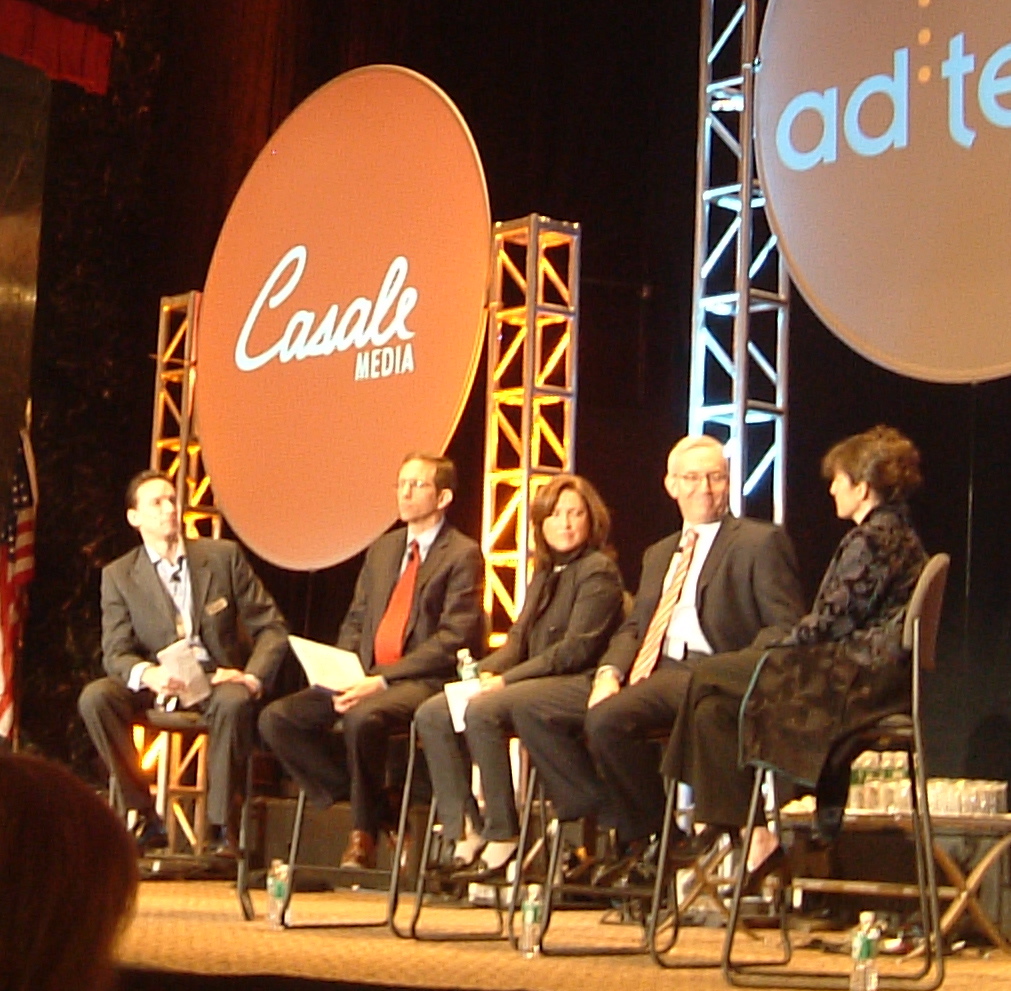
Predictably, with the recent acquisition of YouTube and the growing market share of MySpace, much of the conversation from the speaker’s podium focused on video ontent powered by the now wide adoption of broadbrand. Video (and rich media content in general) is creating new opportunities to engage consumers and generate sales revenues for brand marketers and the ad sales infrastructure that supports them. To highlight this intersection of dependency and opportunity, Tuesday’s keynote panel presentation, “ The Online Video Revolution: A Marketer’s Dream or a Consumer Generated Mess?”, included execs from traditional media (CNN), new media (YouTube), agencies (Isobar) and infrastructure (Akamai).


L-R: Drew Ianni, AdTech Chair, Paul Sagan, President & CEO, Akamai Techologies. Sarah Fay, Isobar Communications (Carat Fusion, Freestyle, Molecular & iProspect), Jonathan Klien, President, CNN USA, Suzie Reider, CMO, YouTube, AdTech 2006 Keynote panel, Tuesday, November 7, 2006, New York City (Photo Credit: (c) 2006 Mark Ippolit0)

Several of the speakers chose to contrast the capabilities of content delivery and internet marketing of 2006 to where the industry was 10 years ago. Akamai CEO, Paul Sagan, who during the 1990’s was President for New Media at Time Warner, was struck with how long it took us to get here. He recalled forecasting in 1996 that broadband would have 70% penetration by 1999. CNN USA President Jonathan Klein commented that CNN.com now sees over 50MM uniques per month and has over 3MM downloads of video new stories each of which engage views for 2 minutes per video with users on average downloading 3-4 stories per session for approximately 12-15 minutes of total viewing. He also commented “pre-roll and post-roll inventory was sold out thru Q4 of this year” and appeared generally bullish about the prospects for online video (ed note: it would have been interesting to hear him comment on whether the growth in online ad sales will come at the expense of CNN’s traditional broadcast business.)

While not specifying the number of streams or downloads, YouTube CMO Suzy Reider, indicated her chief concern that “there is a coming glut of video inventory” from user generated content sites like YouTube (CNN also aggregates UGC via its iReport news channel) and foesaw “depression of prices in the year ahead.” She claimed YouTube was currently enjoying “CPMs in the $20 - $30 range”. Interesting to note that the ad sales organization at YouTube reports to the office of the CMO (Ms Reider’s background is in media sales at CNET and Ziff Davis).

Sarah Fay from Isobar (whose agencies include Carat Fusion, Freestyle, Molecular & iProspect) commented that as a buyer the focus for metrics continues to be engagement and while standard metrics have yet to emerge (and remain somewhat elusive), but confirmed that advertisers are tracking values such as length of viewing as proxies for engagement. Advertisers also continue to fund development at interactive agencies visa vis measurement technologies and investments in media strategy and planning expertise. She cited her own company’s growth from just a few hundred employees in 2003 to over 1600 worldwide.

Jupiter Research released its forecast for Internet ad spending in the US over the next 5 years. With consumers spending as much time online as watching TV the shift of dollars from offline media to online is expected to grow. Biggest investors in online advertising are projected to come from the following verticals: music, entertainment, financial services, travel and automotive.

Mobile advertising was also a thread that was evident in both the sessions and the exhibitors. In the “Now & Next Tech Show” innovation pavilion, all of the emerging companies that were on display were focused on the mobile advertising space. Most were showcasing applications and content (gaming) that have advertising embedded. A number of analytics companies were also in evidence.

(If you’d like to learn more about what was being discussed at the 30+ sessions that took place over the 2 1/2 days, ad:Tech thoughtfully provides a public link to all of the presentations which are shown at the event: http://www.ad-tech.com /presentations)

Most of the action I witnessed was on the show floor itself. This year the exhibit space was spread over 3 full floors of the Hilton’s conference space. Over 10,000 attended the show cramming the aisles, coffee lines and conference rooms. While some complained about the unusually tight hallways and aisles, there were others who like the buzz and sense of urgency that having too many people buzzing about creates for the show. We’ll see what happens: ad:Tech completes their lease agreement with Hilton (ending in 2007) and will determine if the NY event will be moved to the Javits Center to better accommodate future increased attendance.

Quantity does not equal Quality: While we were pleased in the growth in attendance (we saw our raw number of leads captured during the show shoot up 5 fold over 2005), ad:tech seems to be stuck in rut in not attracting visitors outside its core constituents of ad networks, affiliate marketers and service providers. Few if any actual direct advertisers or top interactive agency contacts were in attendance. Considering NY is the financial, media and advertising capital of North America (if not the world) it is perplexing to see so few actual advertisers in attendance.

Friday, November 25, 2005

AdTech NY Nov 2005 – Day Two Journal


AdTech NY Nov 8, 2005

Cindy Gallup former chair of BBH, offered her contrarian point of view that the consumer is not in control (as was forcefully argued in many of the search marketing sessions), but argued that consumer buying behavior is more influenced by “social endorsement”. “What other people thinks matters to consumers” and drives many purchase decisions. Case studies were presented from Seattle’s own “Ranier Beer” campaign to re-ignite a long dormant brand that still inspired passioned response from loyal customers. Virgin Airlines “Porn Movie,” with tongue firmly planted in cheek, promotes first class luxury to male business travelers by way of the “special attention to service” lavished on male recipients stereo-typically—and quite humorously-- associated with behavior celebrated in the trashiest of porn movies. Gallup argued that Virgin’s use of humor created an intimate bond with viewers who were in on the joke and would share their experience of the humor with other business-traveler colleagues.

James Surowiecki, author of The Wisdom of Crowds expounded on this theme of social engagement putting forward his theory of “collective intelligence”. Citing numerous examples where crowds have a higher success rate in predicting outcomes than individual experts (horse races, internal stock markets, presidential caucuses, HP’s employee market forecasts, “Ask the Audience” technique on “Millionaire), Surowiecki urged marketers to go beyond suggestion boxes and focus groups if marketers want better predictors of a new product or service’s success stating “Customers are the best source of information for determine what OTHER customers will want.” To tap into this cognitive intelligence, markets must create the right set of conditions to extract accurate forecasts:

1) Establish a method to aggregate the data
2) Insure that your audience includes a diversity of perspectives and information about the subject
3) Provide a vehicle to enable and record independent and individual decision making from each participant

Businesses that are adopting this approach include Hollywood Site Exchanges whose members more accurately predict success/failure of Hollywood releases better than the studios that produce the movie; Google’s page rank algorithm reveals “hidden order behind the chaos” of consistently retrieving relevant search results; Brainjuicer.com taps into collective intelligence to predict consumer behavior.

Stimulated with these fresh ideas, we headed back to the booth and our respective customers appointments. The “penthouse suite” continued to alternately impress and amuse client visitors. The sheer spaciousness of the penthouse with its jaw dropping views of mid-town and Central Park combined with the spare and faded glory of the furnishings, create quite a contrast, but never detracted from the conversations we had with customers. The grand piano perched at the edge of the window, on the other hand, proved quite a distraction for yours truly as I longed to tickle the ivories… ah well, next time! (maybe I’ll sneak in a moonlight serenade…)


View from the Penthouse, NY Hilton, Nov 8, 2005

In a seminar titled, “Search Beyond Direct Marketing” Joe Pilotta from BigResearch and an analyst from Piper Jaffrey cited some global market stats/projections and the implications for the current and future search marketing industry:

- Paid search will grow to a $30BB by 2010
- Online advertising will grow to $23BB by 2010
- Search is customer acquisition AND product purchase
- Search re-inforces other campaigns and messages delivered by brands in other media
- Search is uniquely designed to deliver call to action

However, advertisers would be remiss if they extract from these stats an overly rosey forecast of what they can expect search marketing to produce. Joe Pilotta provided these stats with some sobering statistics about the 18-34 year old demographic that marketers mistakenly see as a gold mine waiting to be mined through search marketing:

• Facts about the 18-34 demo:
• Average annual savings rate is -1%
• Average credit card debt is $12,000
• More than 50% will not have the resources to pay off their college loans
• Traditional word of mouth is more influential than purchase decisions than search, internet and email combined.

Pilotta offered these stats and warned marketers to not believe the hype of search marketing and instead recommending that “search should not be used as a standalone, but be used synergistically with other media types” to reach the desired audience. He was also critical of the hype around “behavioral targeting.” Behavioral targeting “is irrelevant if as a marketer you do not know where the consumer has been before they got there.” Given the “consumer interest index” (CII) feature of MetricsDirect newly launched behavioral product which tracks and stack ranks consumer behavior for up to 14 days before presenting an ad, Pilotta’s threshold for delivering effective targeted ads would be greatly exceeded. (Note: Before exiting the seminar, Pilotta was promised by yours truly to get a demo of the new MD behavioral product for review and comment.)

Keeping in mind Zango’s efforts in the games business, we eagerly anticipated the comments and observations from the panelists delivering a presentation on “Games As Marketing Vehicles.” The panel was kicked off with some market sizing stats:

• AdverGaming is a mainstream sponsor driven medium
• Funding continues to pour into the space (DoubleFusion announced this week a $10MM round)
• IGN, interactive game agency sold for $650MM
• Demographics of gamers highly sought after by marketers
• Ubiquitous broadband fueling adoption and reach
• Ad Agencies are opening dedicated AdverGaming divisions
• Avg gamer spends >1 hour per day as compared to ~3 hours/day for the average television viewer
• Jupiter forecasts 360MM online gamers WW by 2009

The speakers including former VP Marketing for Xbox, Julia Miller, now CEO of iBloks, were quick to point out that the hardcore gamer community, while very dedicated are not to be construed as the only gamers online. Women are increasingly apt to spend discretionary time gaming and are twice as likely as men to download mobile games. Jennifer Mekon, VP of IGN Entertainment, a games promotions company, pointed out that games define the audience and therefore make for a particular effective advertising medium for targeting specific demographics. Eg: Need to reach female >35 yo, sponsor Mahjong game. Marketers however cannot dismiss the strong community attribute of gamers. Promotions must be consistent with the values of the demographic and transparent in their intent– i.e. if users already have the full version of a game, why would they would want to download a sponsor laden version? And be warned, as quickly as the community will praise a game product for it’s skill-challenging innovations, they will also just as quickly—and vocally-- disparage what are seen as transparent attempts at exploitation of their community.

Recognizing this attribute of the community, Scott Tannen, VP of Games at Wrigley, and operator of game site candystand.com, recommended “that advertisers who want to enter the game space, should build the game first and then attempt to brand the game experience” once development is complete. Shallow attempts such as Tide detergent’s “shoot out the stains” game are seen as completely one dimensional and therefore completely irrelevant to both the casual and sophisticated gamer. “The game and the experience always take priority in the mind of the gamer.”

This last point in particular really struck home as we identify and evaluate potential content partners in the game space who may wish to exploit the revenue potential of distributing Zango, but may not create sufficient value in the mind of the consumer.

Panelists for “Marketing Through Online & Video Games” seminar. Nov 8, 2005

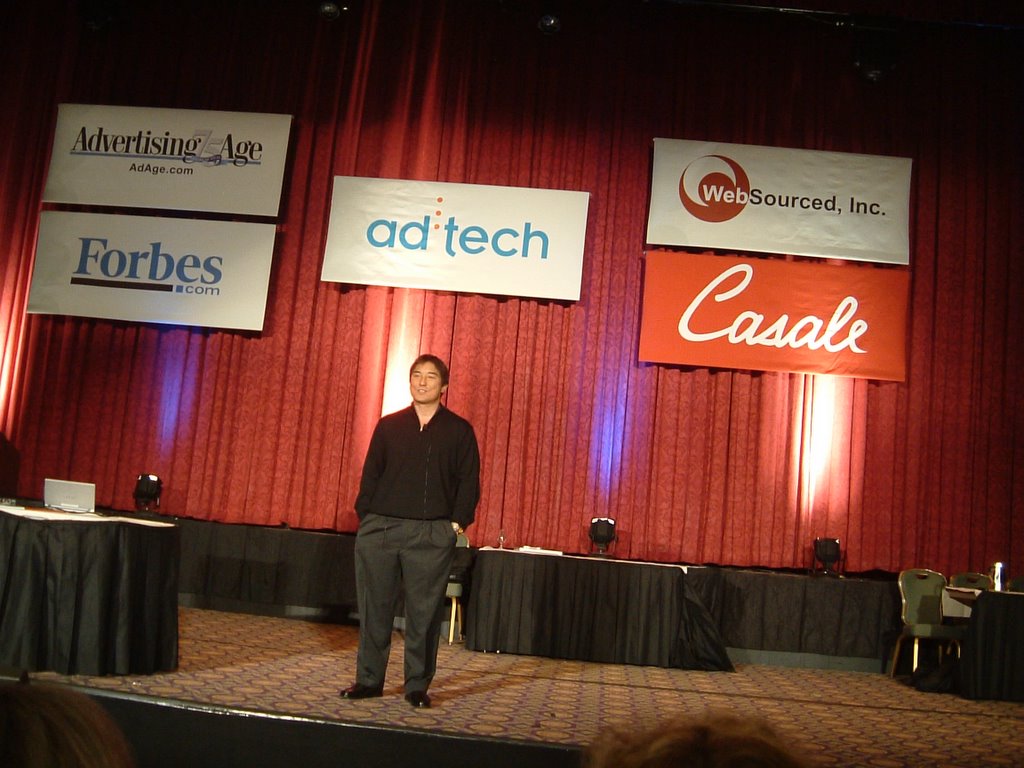
Under the heading “save the best for last” the closing keynote, and most highly anticipated, was delivered by Guy Kawasaki, founding partner of Garage Ventures and former VP Marketing of Apple Computers. Reflecting on how marketers primary role is that of “evangelist” Guy provided his “10 Rules of Evangelism” as inspired by Constantine Brancusi’s quote; “Create like a god, rule like a king and work like a slave.”


Guy Kawasaki delivers his “10 Rules of Evangelism.” Nov 8, 2005

“Create Like a god.”
1) Kill the cash cows. Have the courage and foresight to go against conventional wisdom. Eg: Apple’s software division was completely isolated from the MacII hardware group so as to reinvent the software with no reliance on the hardware which at the time was 100% of Apple’s revenues.
2) Make Meaning. Make the world a better place. End bad things, make things good or make things better. Eg: Nike converted, cotton, rubber and plastic into meaning (women’s shoe campaign)
3) Jump to the Next Curve. Do things 10x better not 10% better. Eg: HP didn’t attempt to create a better daisy wheel printer; they created laser printers.
“Rule Like a king.”
4) Follow the 10/20/30 rule. Receiving 100s of presentations every week, Guy knows what makes for an effective evangelist’s pitch: Never have more than 10 slides in your presentation. Deliver your entire presentation in 20 minutes. Use a type size that is at least 30 points.
5) Make a Mantra. Explain why you exist not a MBA-style mission statement. Eg: Wendy’s: Healthy Fast Food. FedEx: Peace of Mind. Nike: Authentic Athletic Performance. Target: Democratic Design
6) Niche Thyself. Make sure your idea ranks high on the matrix of “Ability to provide unique product or service” as it relates to “Value to the customer”. Dell offered little that was unique, but was high value to the customers and competes on price. “Stupid” companies offer something unique that has little value to customers. Majority of “Dotcoms” delivered little that was unique and little value. But “Bullseye” companies (Fandango, FilmLoop) deliver something that is at once unique and has high value.
“Work like a slave.”
7) Sow entire fields. Don’t sweat when customers buy your product and you don’t know why. Embrace it and learn.
8) Provide a slippery slope. Don’t make it easy to be copied or replicated.
9) Don’t ask anyone to do something that you would not be willing to do.
10) Ignore Bozos: Thomas Watson, IBM “There are 4 customers who will buy computers.” (1945) Digital Equipment Company CEO “No one will ever buy a computer for their home.” (1977). “That job is too far from my home and I will not commute one hour to get there.” The reason Guy Kawasaki offered in 1996 for not accepting the CEO position at Yahoo!

Guy’s passion, intellect and generous use of humor were on display during the 40 minutes he was on the stage. In closing, Guy provided all attendees with complementary copies of his new book The Art of the Start. Everyone left the auditorium with a palpable sense of excitement and re-newed energy. Guy’s insight and passion for evangelism provided the perfect exclamation point to an exhilarating set of experiences that were AdTech NY 2005.

AdTech NY Nov 2005 - Day One Journal


AdTech Daily, Nov 7, 2005 - New York City

What do you get when you combine 200 exhibitors, 42 workshops, 7 keynote addresses and 8500 pre-registered attendees? The world’s largest interactive conference: AdTech 2005.

Back in 1995 when AdTech was first launched, discussion among exhibitors and conference attendees speculated on whether or not the Internet would be around in 10 years. Taking residence at New York’s Hilton Hotel, AdTech is celebrating it’s 11th consecutive year and billed as the world’s largest gathering of interactive advertising professionals. And judging from the diverse activities and opinions expressed throughout the day, AdTech is embracing a far greater scope of ideas and techniques than ever before. Today’s blog provides an overview from the perspective of MetricsDirect participation as both an exhibitor and attendee of AdTech’s many workshops and educational sessions.

Day One was kicked off by educational sessions by a pair of thought provoking keynote speakers: Debra Wahl Meyer, VP Marketing for Toyoto Motor’s Lexus brand discussed brand strategy in “The Age of Engagement” using Lexus’ promise of creating a “covenant” with customers to deliver a “luxury experience” at every point of interaction with the product and the brand. Lexus is using interactivity to enhance “intimacy and fluid access” with consumers citing it’s recent launch of the “New IS” model. The company invited customers to load personal photos to www.thenewis.com that would be integrated in a digital photo montage of the company’s new product and displayed dynamically in an electronic billboard NY’s Times Square. Using live chat interactivity on Edmonds.com, Lexus’s General Manager held a live chat session with over 400 sports cars enthusiasts prior to launch and anticipating potential criticisms of the new model before it was release. This tactic neutralized potential criticism the vehicle may have received had Lexus waited until launch to establish dialogue with this important influencer audience.

In a media environment characterized by a bewildering array of media choices confronting today’s consumers, Sean Dee, VP Marketing of Hard Rock International emphasized the critical importance for brands to establish a unique visual identity. Just 20 years ago, a television advertiser could buy a spot on the #2 rated television show (trivia - “Family Ties” starring Michael J Fox was the #2 rated show in fall of 1985) and reach a potential audience 46MM. Today’s top rated show (CBS’s “CSI”) delivers less than _ of that audience size. To make your message stick, Dee recommends translating a brand into image iconography that resonates emotionally with your consumer. For Hard Rock’s “I Rock NY” new store opening, HR relied on image of rock icons (The Who, Johnny Cash, Jim Hendrix, The Ramones, Nirvana) that reflected the core attributes of Hard Rock’s brand: authentic, passionate, irreverent, unpredictable, and democratic.

Taking a break from some of the big ideas surfaced by these big thinkers, the Sales Team from MetricsDirect immersed itself in what we do best: service customers and optimize campaigns. With over 40 pre-scheduled appointments to supplement the steady stream of traffic that was running past our booth, we had numerous opportunities to interact with current customers as well as meeting nearly one hundred new contacts.

The most common feedback from customers visiting the booth:
1) Service from MetricsDirect is always exceptional
2) MetricsDirect self service web site beats all of its competition
3) MD’s new Behavioral Targeting product is a welcome complement to our traditional CPV product


Keith Smith, CEO, along with Quinn McKee, Account Manager and Matt Doden, Account Executive welcome customers and prospects to MetricsDirect booth at AdTech New York, Nov 7, 2005

After a welcome lunch break we returned to a busy exhibit hall with more meetings and drive buys packing the schedule. The afternoon also featured some terrific workshops. Two that were sampled were “Marketing to Women and Children in the 21st Century” and “Internet Brand Marketers and ‘How Pure Play Works Best’”.

A panel discussion among advertisers and market research firms focused on women were emphatic in their assertion that women in the 21st century are a diverse market set with a wide variety of interests and concerns. To create actionable campaigns, Mary Meehan, EVP of Iconoculture, classified 21st women in the following segments:

• Boomer Women: Age 41-59 years old, these women are accustomed to managing it all and associate with brands that above all provide convenience and control. Meehan noted that this segment also contains a subset of Boomer Grandparents citing the average age of a grandmother is 48 years old and number 32 million in the US. These are not your grandma’s grandmother; these women are active, engaged, involved and technologically, very sophisticated with money, lots of money, to spend.

• GenX Women: Age 28-40 years old, GenX’ers are discerning, realistic and pragmatic. “Good enough” will do. They respect authenticity and real voices. These are the women that are blogging and spending time online chatting.

• Latina: Age 21 -44 years old, Latina’s are avid learners and are on a quest to define their identity. Latina is Super Mamá. She can do it all and wants information, support and community.

• Millenials (aka Gen Y’s) age 21-27 years old expect things their way. This is the “cut and paste” generation that is accustomed to support. Everything must be personalized, customized, and shareable.

Lable Networks CEO Kathleen Gasperini added her perspective to the panel. Advertisers like Apple and Burton Snow Boards use these techniques to appeal to youth culture in the 21st century:

• Imagination – speak to youth in a way that demonstrates yours
• DIY – let youth discover your brand
• Viral Cred – blogs provide independent stamp approval to your brand
• Driving Subcultures – Music, Tech, Sports, Fashion are the real drivers
• Be a part of their lifestyle – it’s not enough to have youth buy your product

Turning attention from theory to practice, top internet brands Shutterfly, LowerMyBills and ELoan discussed the techniques they use to drive traffic, sales and life time value from their respective customer base.

Matt Coffin, CEO of LowerMyBills describes the company’s marketing strategy as “Go big or go home.” Living up to this aspiration, LMB is the internet’s largest financial services advertiser spending over $10MM per month using online advertisinig as a primary vehicle to acquire customers supplemented by traditional print, outdoor and television buys.

ELoan CEO Catherine Muriel takes a more surgical approach to acquiring its younger demographic of 35 y.o. customers relying on exhaustive data analysis to identify the most effective sources of leads and conversions. ELoan use on a mix of search engine marketing, contextual and behavioral networks to manage its brand. Similarly, Shutterfly CEO, Jeff Housenhold cites his company’s effective use of partner marketing (eg: 800flowers co-op mailing) combined with rigorous customer life cycle data analysis to drive their marketing and promotions. Shutterfly has developed over 100 customer segment profiles based on demographics, psychographics and past product consumption to stimulate creative, build traffic and effect conversions.

During Q&A, all three CEO’s cited proficiency at statistics and analytics as the most highly prized skill set their organizations will require for future success. When asked “ If you could select one of the following wishes to predict success for your business, what would you choose: Eliminating your largest competitor, doubling your marketing budget or identifying a new high performing advertising network, all of these internet brand CEO’s selected doubling the marketing budget as the best of the three.

Monday’s sessions were closed appropriately by a highly engaging keynote address delivered by Saatchi & Saatchi, CEO Kevin Roberts. Roberts, author of Lovemarks, The End of Brands, and self described “bald, fat, rich white guy” prognosticated on the “screen age” that consumers in the 21st century live in and the opportunity for all marketers to take advantage of SISOMO: as described in Robert’s new book SISOMO, The Future on Screen. (Screens are defined as cell phones, tv, computer, devices, signage, etc). Roberts implores marketers to take advantage of SISOMO to deliver emotion to drive choice in the “attraction economy” where choice is driven by emotion and emotion leads consumers to take action.

Using a mix of tv spots (New Zealand Blacks rugby team, Brazilian beer, New Zealand Telephone, Lexus IS) Roberts illustrates how SISMO inspires “loyalty beyond reason”. All of the spots relied on strong story telling and make magical the moment of truth when the subject of the ad endorses the product. Roberts also warned how market research and testing can deaden creativity; the only measure that counts: “Do you want to see it again?” Make products irresistible. Roberts challenged conventional thinking about brand marketing, saying “brands do not own consumers, but consumers own the brand.” Apple has such incredible brand loyalty because the consumers of Apple own the emotional connection and affinity for the brand. To build this kind of loyalty, Roberts encouraged those advertisers who are attracted to the efficacies of CRM to stop asking customers for permission, and instead create attraction through the use of mystery, sensuality and intimacy. Using the tools of story, music and humor advertisers can create the attraction that the will connect consumers to a “lovemark” not merely a brand. Roberts ended the session re-capping the thoughts above recommending that “instead of making your next call to your office, call your Mom and Dad instead.”


SISOMO Guru and Saatchi & Saatchi CEO, Kevin Roberts implores AdTech attendees, “Don’t call your office, call your mom & dad.” Nov 7, 2005


Time for one more meeting at the suite, before I think I’ll take Kevin's advice and call home.

Thursday, July 21, 2005

Give 'Em Hell Harry! Old Media Trumps New

Last weekend's release of the latest Harry Potter demonstrates yet again how the power of the imagination trumps manufactured entertainment every time. JK Rowlings latest installment sold over 6 million copies of the new HP series within 24 hours of its much anticipated release. Scholastic, Rowling's publisher, expects to sell nearly 30 Million copies during the first few months of the release. That's nearly double the 18 million sold of the previous HP installment. It appears that with each release in the series the audience for Our Boy Harry, and their insatiable appetite for all things Harry, multiplies exponentially.

In this era of over-hyped multiplatinum video game/DVD/CD/mashup/podcast/PSP/ringtone releases, hats off to old media's ability to capture the headlines and-- most importantly-- the fertile imagination of millions the world over by the simple application of black type to white paper.

Viva Gutenberg!